 Back to News & Insights
Fit for the Future: Demand and Capacity Planning for the Thames Valley Cancer Alliance
July 16, 2024 • Reading time 2 minutes
Since the pandemic, SACT activity has grown rapidly
The number of patients receiving Systemic Anti-Cancer Therapy (SACT) in Thames Valley grew by 7% between 2021 and 2022. This rise in activity, combined with increasing treatment complexity, length, and national shortages in SACT staff, has put pressure on departments and workforce.
Thames Valley Cancer Alliance serves a population of 2.3 million people, spanning two ICSs, four Acute Trusts and nine Hospitals. SACT is delivered within the Alliance by Oxford University Hospitals (OUH), Buckinghamshire Healthcare (BHT), Royal Berkshire (RBH) and Great Western Hospitals (GWH).
Starting in September 2023, Edge Health worked closely with TVCA and its constituent trusts to provide demand and capacity analysis, identify system pressures and develop innovative solutions to meet this need over the next five years.
As an Alliance, we were aware of the national and regional SACT pressures and wanted to review our demand, capacity and workforce to support service development and raise the awareness of the significant increase in activity we will expect in the coming years. Edge Health worked closely with our clinical teams to understand the pressures and activity in SACT services and to provide recommendations to be delivered across the system including a demand and capacity tool for our biannual SACT assessments.
Edge Health are knowledgeable, professional and a very approachable team supporting the requirements of our service.
Lyndel Moore – TVCA Cancer Clinical Lead for Nursing and AHPs
Our approach involved working closely with key stakeholders across the Alliance to draw out insights from provider data and workforce interviews
After gathering data on patient volumes, complexity and treatment types and combining this with workforce data from all four acute trusts, we interviewed key clinicians and stakeholders to understand and articulate the pressures and problems that they were facing on a day-to-day basis.
From data and interview insights, we developed a set of scenarios for the future growth of SACT treatment within the alliance. These were:
- Population growth scenario: demographics-driven model
- Core growth scenario: based on growth trends observed locally and nationally
- High growth scenario: accounting for additional pressure exerted by factors such as high growth in demand for oral SACT treatments
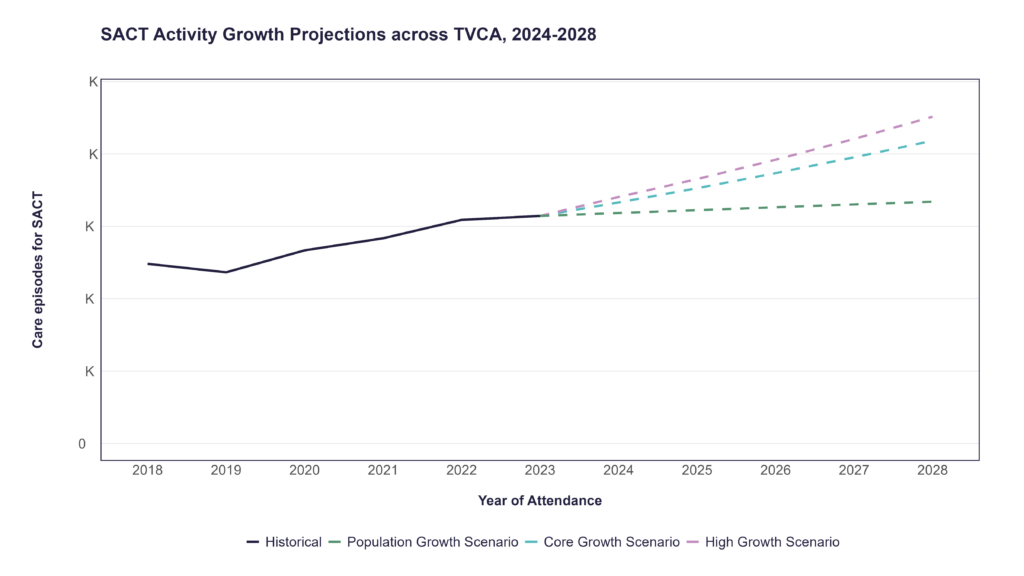
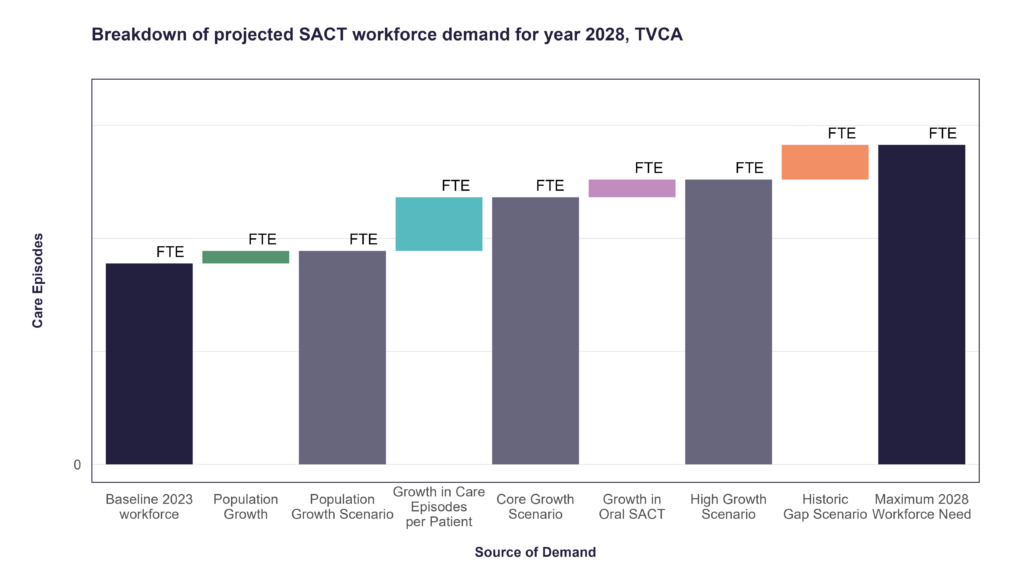
Note: Chart figures hidden for confidentiality
We wanted to provide actionable solutions to pressures faced by SACT units
Engagement with trusts and thorough analysis led to the identification of four wide areas for opportunity:
- Capacity
- Efficiency
- Workforce
- Operations
We developed creative and practical opportunities that Trusts could utilise to help tackle these growing problems, such as increasing self-administration of subcutaneous SACT to manage capacity pressures or developing non-administrative and managerial professional growth avenues to help increase the retention of workforce.
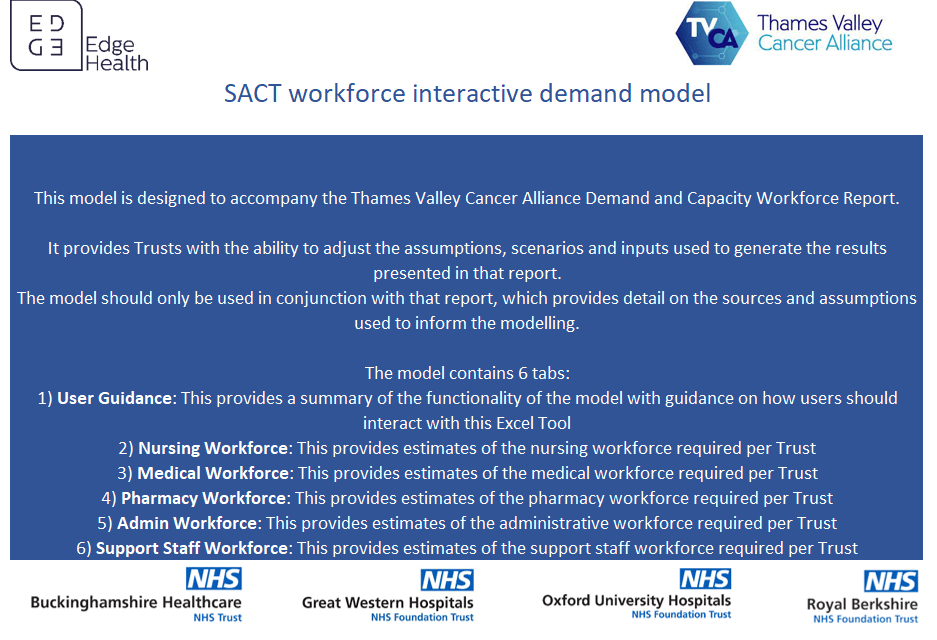
To aid Trusts with their future demand and capacity planning needs, we produced an interactive demand model. This allows Trusts to use pre-generated demand projections or input their own figures for future workforce planning and has already been used as part of TVCA’s bi-annual demand and capacity planning.

Jonathan Bruce
Jon is a Director at Edge Health, an experienced health economist and modelling expert. Jon specialises in the application of economic and statistical modelling techniques to improve decision-making and drive operational improvements.

Lucia De Santis
Lucia was formerly a Edge Health consultant and NHS-trained medical doctor. She is passionate about engaging workforce in healthcare improvements, evidence-based transformation and operational strategy. Her unique insights add depth and human element to data analysis, literature review and visualisation.